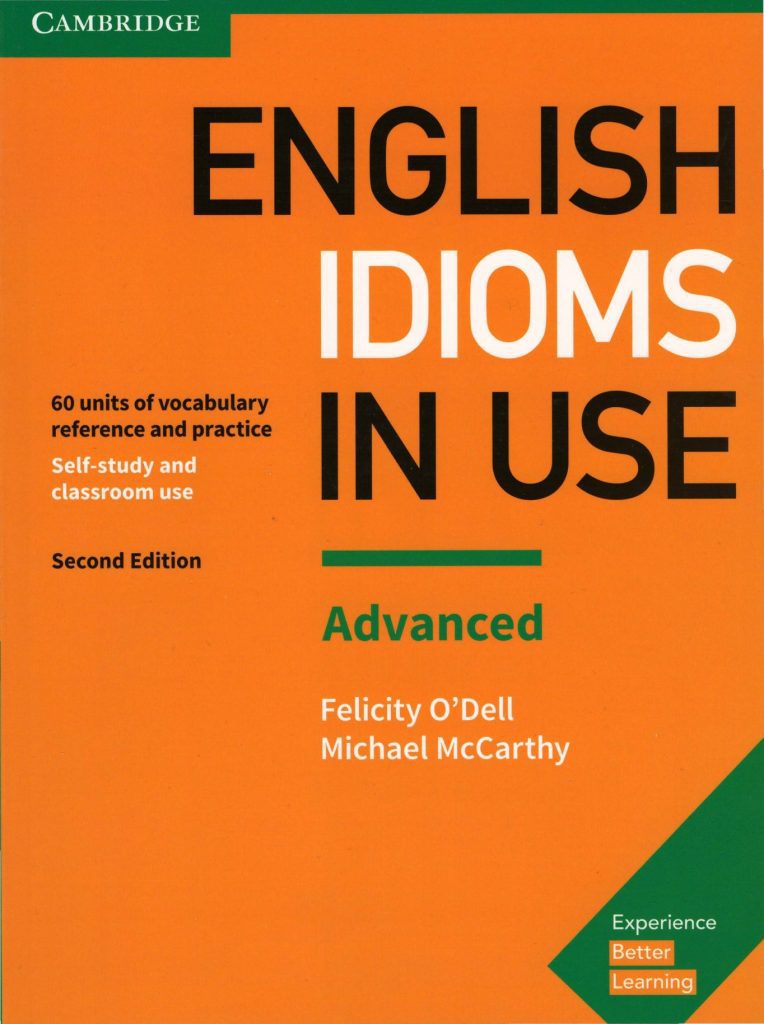
About This Book
English Idioms in Use Advanced is the advanced level of the Idioms in Use family. The destination heading gives the exact title; the file served there, ‘English Idioms in Use Advanced_compressed.pdf’, carries the exact title itself — a compressed copy of the same volume under the filename the site serves it by. The book’s work is the idiom layer at full stretch: expressions whose meanings live in the whole phrase, presented for learners whose grammar and vocabulary are already strong.
Idioms are where a language keeps its personality. A learner can be grammatically flawless and lexically rich and still sound like a very good translation, because natural English is salted with phrases that mean something their words never said. Learning them is not decoration for advanced learners; it is comprehension insurance, since native speech, journalism, and fiction deploy idioms precisely where precision matters — in headlines, in negotiations, in jokes that carry real information. But the advanced skill is double: production and restraint. An idiom used a degree off-register sounds worse than plain speech, like a borrowed joke told at the wrong funeral; the advanced volumes of this family therefore teach the phrase with its weather — formal or slangy, warm or cutting, dated or current — because the weather is half the meaning. There is also a recognition dividend: idioms learned actively are heard everywhere afterward, and listening comprehension quietly jumps a level. The learner who finishes this layer stops translating English in their head and starts inhabiting it, which is the real border between advanced and fluent.
What Learners Will Practise
Idioms as Whole Meanings
Learners practise taking idioms as single units of meaning, never word-by-word. An idiom decoded literally is an idiom missed; the phrase is the word.
Register and Restraint
The book practises judging each idiom’s weather — its formality, warmth, and currency — and abstaining when the moment is wrong. Advanced idiom skill shows as much in the idioms not used as in those deployed.
Recognition in the Wild
Readers practise catching idioms at native speed in speech and print, where they arrive unannounced and unrepeated. Recognition trained on the page transfers to the ear, and comprehension follows.
Key Features
The advanced pitch is the feature: idioms selected for real advanced use, not tourist colour. The register guidance is the second — each phrase with its weather — and the shelf fit the third, the idiom volume beside this list’s advanced vocabulary and phrasal verbs. On this shelf it salts the language here.
Who This Book Is For
Advanced learners whose English is correct but sounds translated are its first audience. Teachers form its second readership, stocking their own phrase-hoard. Candidates and professionals make its third, wanting the final texture of real English.
How to Use This Book
Learn fewer idioms than you want to — depth beats collection; know ten completely rather than fifty approximately. Test each new idiom in one written sentence and one spoken one before trusting it. Keep a heard-it-in-the-wild notebook; an idiom you have met three times in real life is yours.
Related Books
The shelf’s advanced vocabulary stands at English Vocabulary in Use Advanced, and its advanced phrasal verbs at English Phrasal Verbs in Use Advanced.