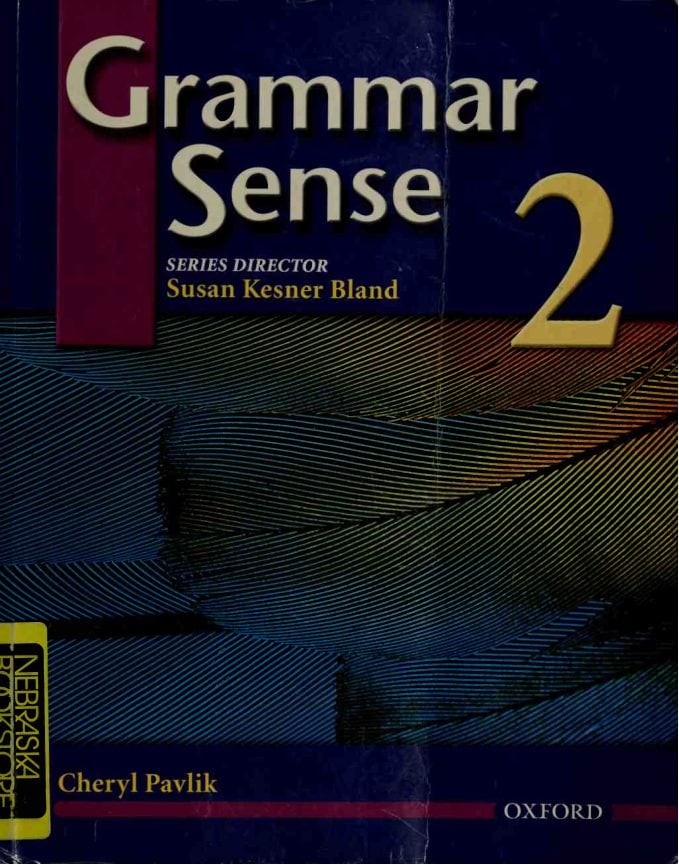
About This Book
Grammar Sense Book 2 is the second book of the Grammar Sense series. The destination page is headed with this post’s exact title, and the file it serves, ‘Grammar Sense – 2.pdf’, carries the same series and level in the host’s dash form — the same volume under the filename the site serves it by. The book’s work is the extension: Book 1’s founded sense carried into the next structures, with terminology introduced at the pace intuition can adopt it.
Naming is Book 2’s delicate operation. A label introduced too early becomes a substitute for understanding — the learner recites ‘past tense’ while feeling nothing — but a label introduced after the pattern is familiar lands like meeting someone whose face you already know. The sense-first series times its naming by that principle, and the classroom effect is distinctive: grammar lessons that feel like recognition ceremonies, where the class’s collective ‘oh, THAT’s what that’s called’ carries genuine pleasure. Meanwhile the sense itself is being stress-tested, extended to structures complex enough that pure instinct wobbles — which is healthy, because the wobble teaches the learner where feeling ends and analysis must help. Book 2’s graduates are bilingual in the only sense that matters here: fluent in intuition, literate in its names, and able to pass between the two without losing either. Parents hear the new bilingualism as explanations attempted at home — sometimes wrong in detail, always right in spirit. That ratio improves weekly, and everyone in the house can hear it improving.
What Learners Will Practise
Extending the Ear
Learners practise carrying Book 1’s intuition into new structures, feeling first. Extension at this pace keeps the sense honest — it grows by pattern, not by exception-hoarding.
Labels as Recognition
The book practises meeting terminology for patterns already owned by ear. A name learned as recognition sticks for life; a name learned as a definition evaporates by summer.
Knowing Where Feeling Ends
Readers practise noticing intuition’s limits and calling analysis to help. The handover between sense and rule, smoothly made, is mature grammar in miniature.
Key Features
The recognition-timed naming is the feature: labels introduced to known faces. The bilingual outcome is the second — intuition and terminology in one learner — and the shelf fit the third, the compounding beside this list’s Books 1 and 3. On this shelf it compounds the sense here.
Who This Book Is For
Second-year grammar learners with the first book’s intuition are its first audience. Teachers form its second readership, naming known patterns. Parents make its third, hearing explanations attempted.
How to Use This Book
Withhold each label until the pattern has been heard correctly three times; then name it ceremonially. When intuition wobbles on a new structure, say so approvingly — the wobble is the curriculum announcing itself. Keep a class wall of ‘names we now own’; the growing list is the year’s true report card.
Related Books
The first book stands at Grammar Sense Book 1, and the third at Grammar Sense Book 3.